P13: The object of the idea constituting the human Mind is the Body, or a certain mode of Extension which actually exists, and nothing else.
Dem.: For if the object of the human Mind were not the Body, the ideas of the affections of the Body would not be in God/Nature (by P9 C) insofar as he constituted our Mind, but insofar as he constituted the mind of another thing, i.e. (by P11 C), the ideas of the affections of the Body would not be in our Mind; but (by A4) we have ideas of the affections of the body. Therefore, the object of the idea that constitutes the human Mind is the Body, and it (by P11) actually exists. Next, if the object of the Mind were something else also, in addition to the Body, then since (by IP36) nothing exists from which there does not follow some effect, there would necessarily (by P12) be an idea in our Mind of some effect of it. But (by A5) there is no idea of it. Therefore, the object of our Mind is the existing Body and nothing else, q.e.d.
Cor.: From this it follows that man consists of a Mind and a Body, and that the human Body exists, as we are aware of it.
Schol.: From these {propositions} we understand not only that the human Mind is united to the Body, but also what should be understood by the union of Mind and Body. But no one will be able to understand it adequately, or distinctly, unless he first knows adequately the nature of our Body. For the things we have shown so far are completely general and do not pertain more to man than to other Individuals, all of which, though in different degrees, are nevertheless animate. For of each thing there is necessarily an idea in God/Nature, of which God/Nature is the cause in the same way as he is of the idea of the human Body. And so, whatever we have said of the idea of the human Body must also be said of the idea of any thing.
However, we also cannot deny that ideas differ among themselves, as the objects themselves do, and that one is more excellent than the other, and contains more reality, just as the object of the one is more excellent than the object of the other and contains more reality. And so to determine what is the difference between the human Mind and the others, and how it surpasses them, it is necessary for us, as we have said, to know the nature of its object, i.e., of the human Body. I cannot explain this here, nor is that necessary for the things I wish to demonstrate. Nevertheless, I say this in general, that in proportion as a Body is more capable than others of doing many things at once, or being acted on in many ways at once, so its Mind is more capable than others of perceiving many things at once. And in proportion as the actions of a body depend more on itself alone, and as other bodies concur with it less in acting, so its mind is more capable of understanding distinctly. And from these {truths} we can know the excellence of one mind over the others, and also see the cause why we have only a completely confused knowledge of our Body, and many other things which I shall deduce from them in the following {propositions}. For this reason I have thought it worthwhile to explain and demonstrate these things more accurately. To do this it is necessary to premise a few things concerning the nature of bodies.
A1′: All bodies either move or are at rest. A2′: Each body moves now more slowly, now more quickly.
L1: Bodies are distinguished from one another by reason of motion and rest, speed and slowness, and not by reason of substance.
Dem.: I suppose that the first part of this is known through itself. But that bodies are not distinguished by reason of substance is evident both from IP5 and from IP8. But it is more clearly evident from those things which are said in IP15 S.
L2: All bodies agree in certain things.
Dem.: For all bodies agree in that they involve the concept of one and the same attribute (by D1), and in that they can move now more slowly, now more quickly, and absolutely, that now they move, now they are at rest.
L3: A body which moves or is at rest must be determined to motion or rest by another body, which has also been determined to motion or rest by another, and that again by another, and so on, to infinity.
Dem.: Bodies (by D1) are singular things which (by LI) are distinguished from one another by reason of motion and rest; and so (by IP28), each must be determined necessarily to motion or rest by another singular thing, viz. (by P6) by another body, which (by A1′) either moves or is at rest. But this body also (by the same reasoning) could not move or be at rest if it had not been determined by another to motion or rest, and this again (by the same reasoning) by another, and so on, to infinity, q.e.d.
Cor.: From this it follows that a body in motion moves until it is determined by another body to rest; and that a body at rest also remains at rest until it is determined to motion by another.
This is also known through itself. For when I suppose that body A, say, is at rest, and do not attend to any other body in motion, I can say nothing about body A except that it is at rest. If afterwards it happens that body A moves, that of course could not have come about from the fact that it was at rest. For from that nothing else could follow but that body A would be at rest.
If, on the other hand, A is supposed to move, then as often as we attend only to A, we shall be able to affirm nothing concerning it except that it moves. If afterwards it happens that A is at rest, that of course also could not have come about from the motion it had. For from the motion nothing else could follow but that A would move. Therefore, it happens by a thing which was not in A, viz. by an external cause, by which {NS: the Body in motion, A} has been determined to rest.
A1″: All modes by which a body is affected by another body follow both from the nature of the body affected and at the same time from the nature of the affecting body, so that one and the same body may be moved differently according to differences in the nature of the bodies moving it. And conversely, different bodies may be moved differently by one and the same body.
A2″: When a body in motion strikes against another which is at rest and cannot give way, then it is reflected, so that it continues to move, and the angle of the line of the reflected motion with the surface of the body at rest which it struck against will be equal to the angle which the line of the incident motion makes with the same surface.
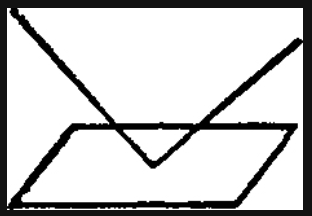
This will be sufficient concerning the simplest bodies, which are distinguished from one another only by motion and rest, speed and slowness. Now let us move up to composite bodies.
Definition: When a number of bodies, whether of the same or of different size, are so constrained by other bodies that they lie upon one another, or if they so {II/100} move, whether with the same degree or different degrees of speed, that they communicate their motions to each other in a certain fixed manner, we shall say that those bodies are united with one another and that they all together compose one body or Individual, which is distinguished from the others by this union of bodies.
A3″: As the parts of an Individual, or composite body, lie upon one another over a larger or smaller surface, so they can be forced to change their position with more or less difficulty; and consequently the more or less will be the difficulty of bringing it about that the Individual changes its shape. And therefore the bodies whose parts lie upon one another over a large surface, I shall call hard; those whose parts lie upon one another over a small surface, I shall call soft; and finally those whose parts are in motion, I shall call fluid.
L4: If, of a body, or of an Individual, which is composed of a number of bodies, some are removed, and at the same time as many others of the same nature take their place, the {NS: body, or the} Individual will retain its nature, as before, without any change of its form.
Dem.: For (by LI) bodies are not distinguished in respect to substance; what constitutes the form of the Individual consists {NS: only} in the union of the bodies (by the preceding definition). But this {NS: union} (by hypothesis) is retained even if a continual change of bodies occurs. Therefore, the Individual will retain its nature, as before, both in respect to substance, and in respect to mode, q.e.d.
L5: If the parts composing an Individual become greater or less, but in such a proportion that they all keep the same ratio of motion and rest to each other as before, then the Individual will likewise retain its nature, as before, without any change of form.
Dem.: The demonstration of this is the same as that of the preceding Lemma.
L6: If certain bodies composing an Individual are compelled to alter the motion they have from one direction to another, but so that they can continue their motions and communicate them to each other in the same ratio as before, the Individual will likewise retain its nature, without any change of form.
Dem.: This is evident through itself. For it is supposed that it retains everything which, in its definition, we said constitutes its form. {NS: See the Definition before L4.}
L7: Furthermore, the Individual so composed retains its nature, whether it, as a whole, moves or is at rest, or whether it moves in this or that direction, so long as each part retains its motion, and communicates it, as before, to the others.
Dem.: This {NS: also} is evident from the definition preceding L4.
Schol.: By this, then, we see how a composite Individual can be affected in many ways, and still preserve its nature. So far we have conceived an Individual which is composed only of bodies which are distinguished from one another only by motion and rest, speed and slowness, i.e., which is composed of the simplest bodies.37 But if we {II/102} should now conceive of another, composed of a number of Individuals of a different nature, we shall find that it can be affected in a great many other ways, and still preserve its nature. For since each part of it is composed of a number of bodies, each part will therefore (by L7) be able, without any change of its nature, to move now more slowly, now more quickly, and consequently communicate its motion more quickly or more slowly to the others.
But if we should further conceive a third kind of Individual, composed {NS: of many individuals} of this second kind, we shall find that it can be affected in many other ways, without any change of its form. And if we proceed in this way to infinity, we shall easily conceive that the whole of nature is one Individual, whose parts, i.e., all bodies, vary in infinite ways, without any change of the whole Individual.
If it had been my intention to deal expressly with body, I ought to have explained and demonstrated these things more fully. But I have already said that I intended something else, and brought these things forward only because I can easily deduce from them the things I have decided to demonstrate.
POSTULATES I. The human Body is composed of a great many individuals of different natures, each of which is highly composite. II. Some of the individuals of which the human Body is composed are fluid, some soft, and others, finally are hard. III. The individuals composing the human Body, and consequently, the human Body itself, are affected by external bodies in very many ways. IV. The human Body, to be preserved, requires a great many other bodies, by which it is, as it were, continually regenerated. V. When a fluid part of the human Body is determined by an external body so that it frequently thrusts against a soft part {of the Body}, it changes its surface and, as it were, impresses on {the soft part} certain traces of the external body striking against {the fluid part}. VI. The human Body can move and dispose external bodies in a great many ways.