Human Bondage: Slavery to the Passions
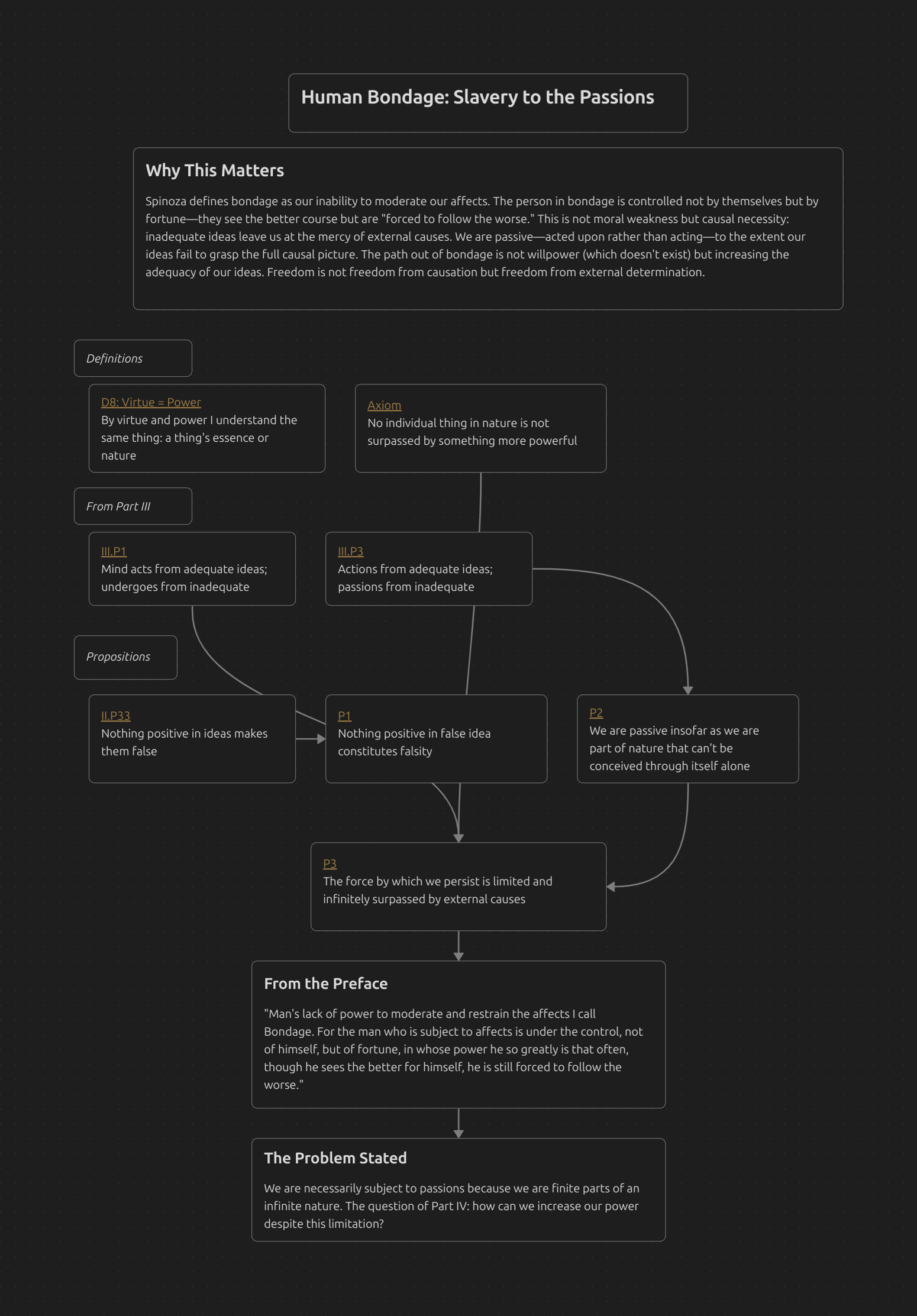
Why This Matters
Spinoza defines bondage as our inability to moderate our affects. The person in bondage is controlled not by themselves but by fortune—they see the better course but are “forced to follow the worse.” This is not moral weakness but causal necessity: inadequate ideas leave us at the mercy of external causes. We are passive—acted upon rather than acting—to the extent our ideas fail to grasp the full causal picture. The path out of bondage is not willpower (which doesn’t exist) but increasing the adequacy of our ideas. Mental freedom is not mental freedom from causation but mental freedom from external determination.
Good and Evil Are Modes of Thinking
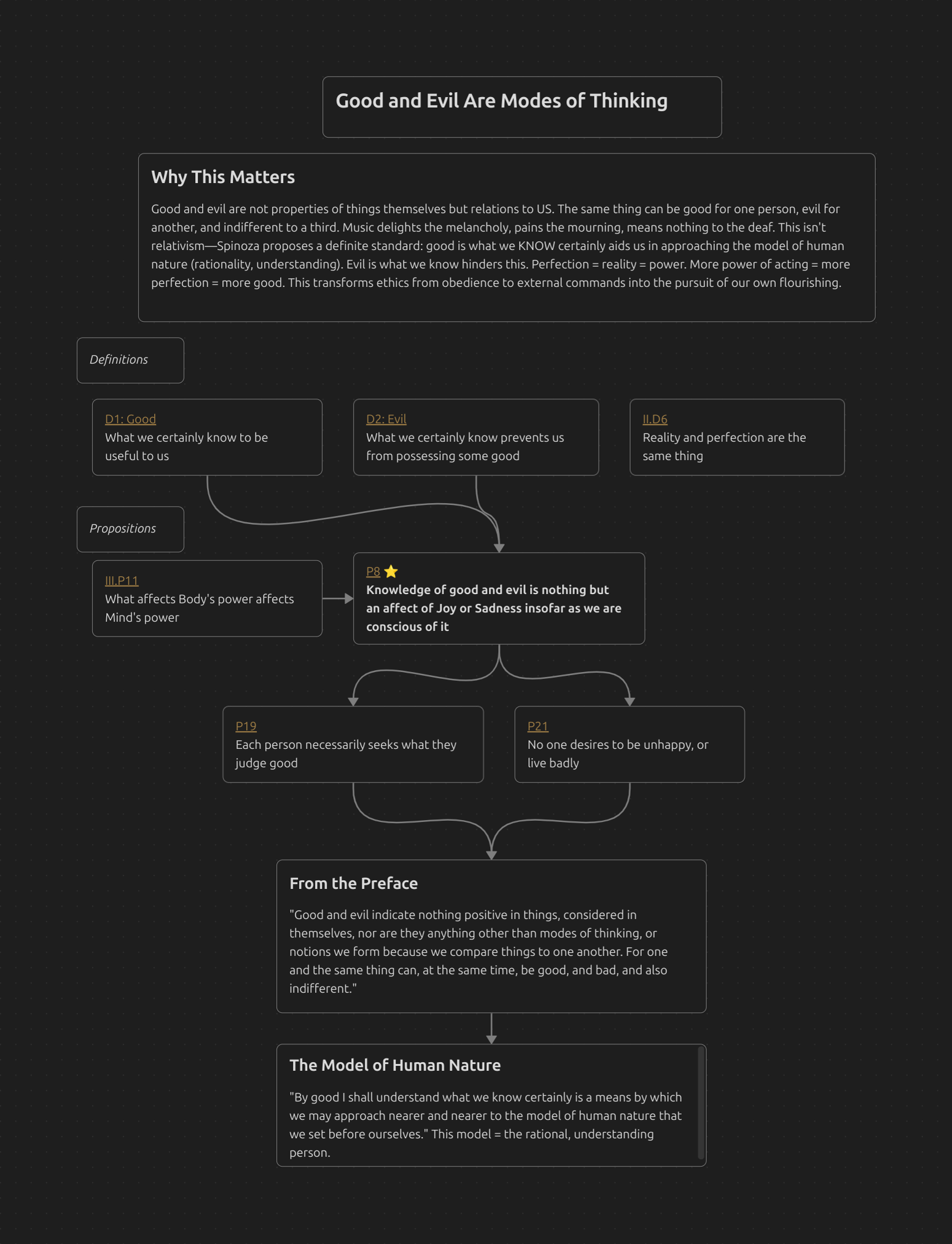
Why This Matters
Good and evil are not properties of things themselves but relations to US. The same thing can be good for one person, evil for another, and indifferent to a third. Music delights the melancholy, pains the mourning, means nothing to the deaf. This isn’t relativism—Spinoza proposes a definite standard: good is what we KNOW certainly aids us in approaching the model of human nature (rationality, understanding). Evil is what we know hinders this. Perfection = reality = power. More power of acting = more perfection = more good. This transforms ethics from obedience to external commands into the pursuit of our own intellectual joy.
Why Knowing the Good Doesn’t Make Us Do It
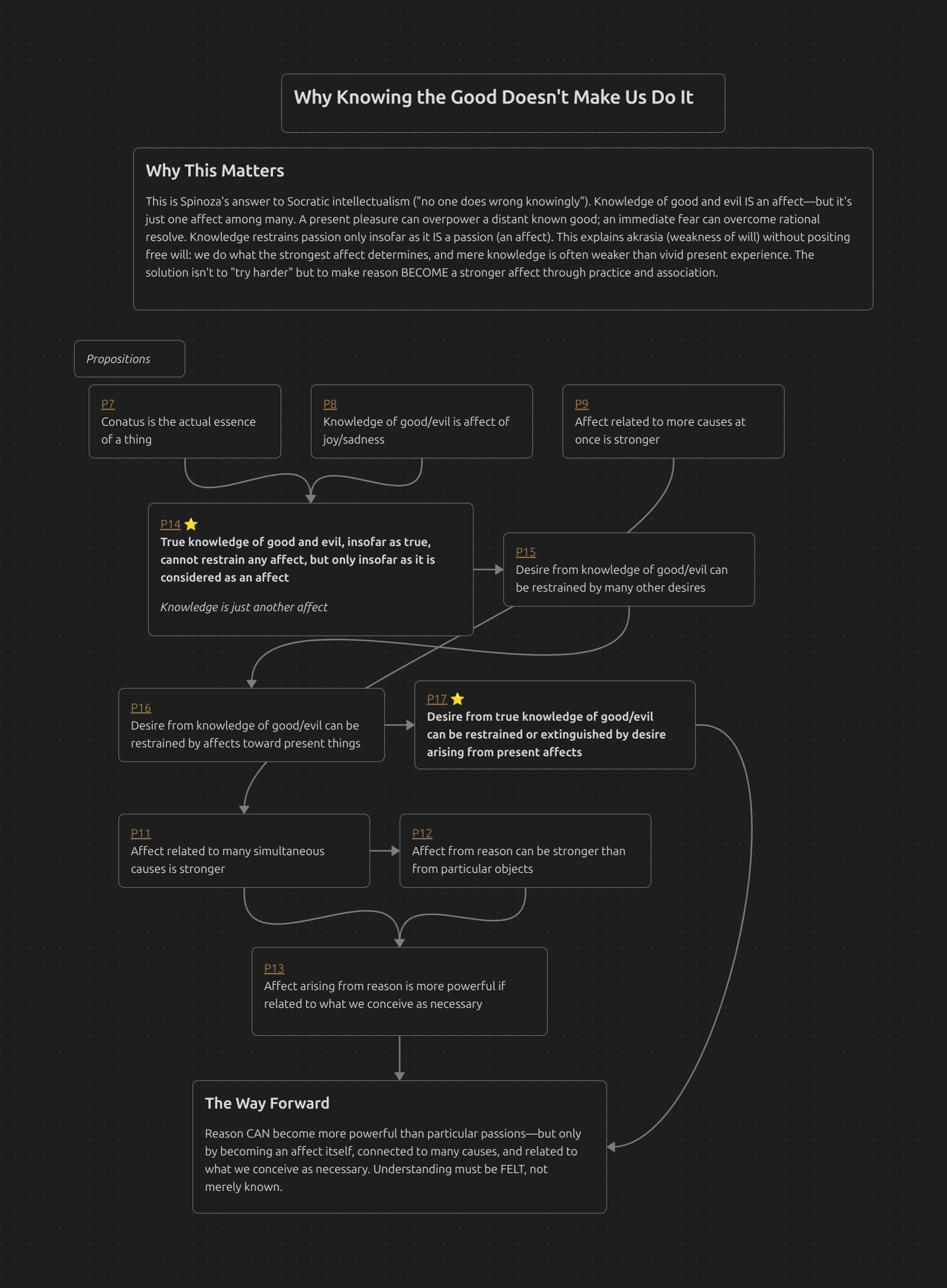
Why This Matters
This is Spinoza’s answer to Socratic intellectualism (“no one does wrong knowingly”). Knowledge of good and evil IS an affect—but it’s just one affect among many. A present pleasure can overpower a distant known good; an immediate fear can overcome rational resolve. Knowledge restrains passion only insofar as it IS a passion (an affect). This explains akrasia (weakness of will) without positing free will: we do what the strongest affect determines, and mere knowledge is often weaker than vivid present experience. The solution isn’t to “try harder” but to make reason BECOME a stronger affect through practice and association.
Virtue Is Power Is Acting from Reason
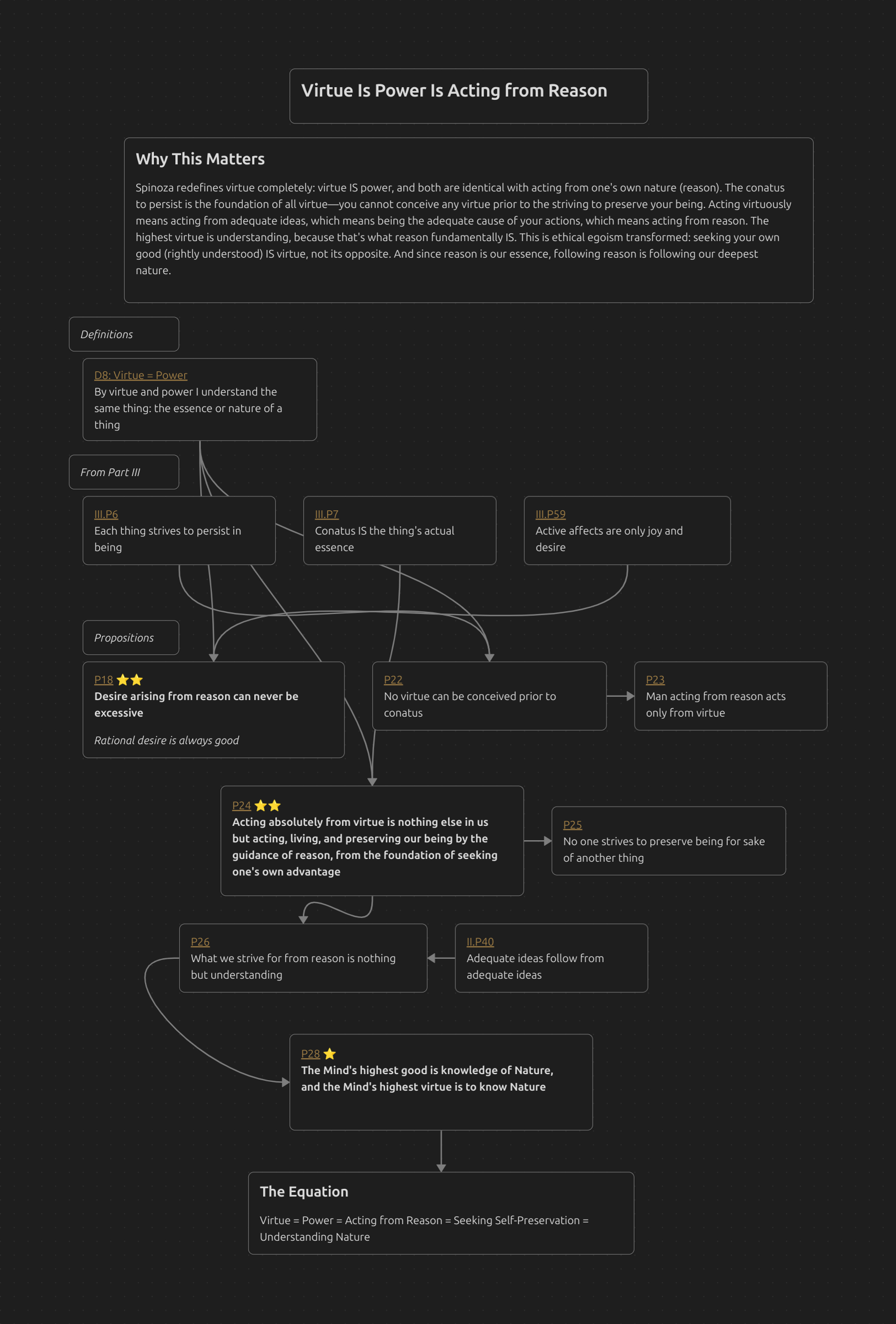
Why This Matters
Spinoza redefines virtue completely: virtue IS power, and both are identical with acting from one’s own nature (reason). The conatus to persist is the foundation of all virtue—you cannot conceive any virtue prior to the striving to preserve your being. Acting virtuously means acting from adequate ideas, which means being the adequate cause of your actions, which means acting from reason. The highest virtue is understanding, because that’s what reason fundamentally IS. This is ethical egoism transformed: seeking your own good (rightly understood) IS virtue, not its opposite. And since reason is our essence, following reason is following our deepest nature.
Rational People Agree in Nature
Why This Matters
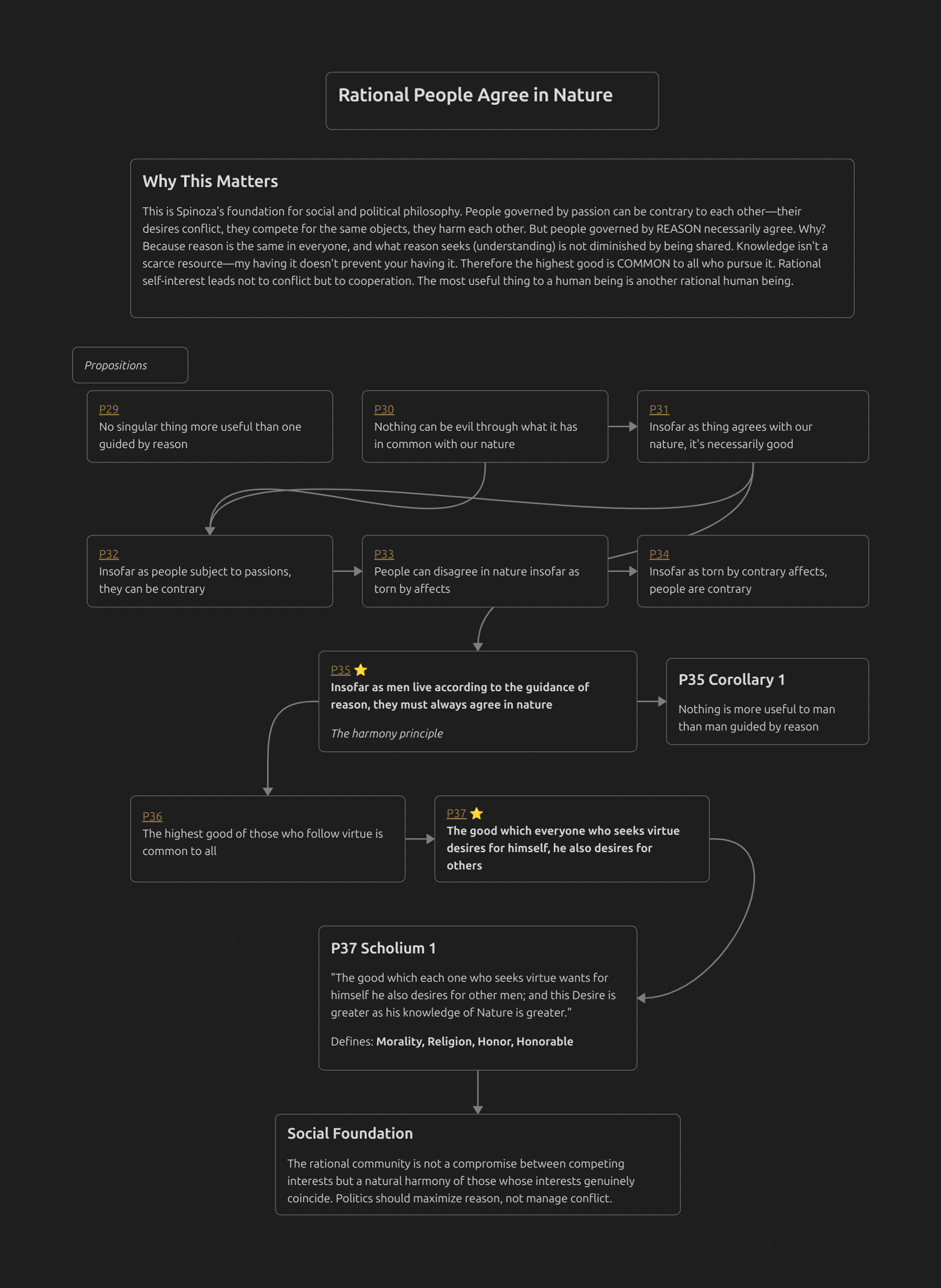
This is Spinoza’s foundation for social and political philosophy. People governed by passion can be contrary to each other—their desires conflict, they compete for the same objects, they harm each other. But people governed by REASON necessarily agree. Why? Because reason is the same in everyone, and what reason seeks (understanding) is not diminished by being shared. Knowledge isn’t a scarce resource—my having it doesn’t prevent your having it. Therefore the highest good is COMMON to all who pursue it. Rational self-interest leads not to conflict but to cooperation. The most useful thing to a human being is another rational human being.
Which Emotions Help, Which Harm
Why This Matters
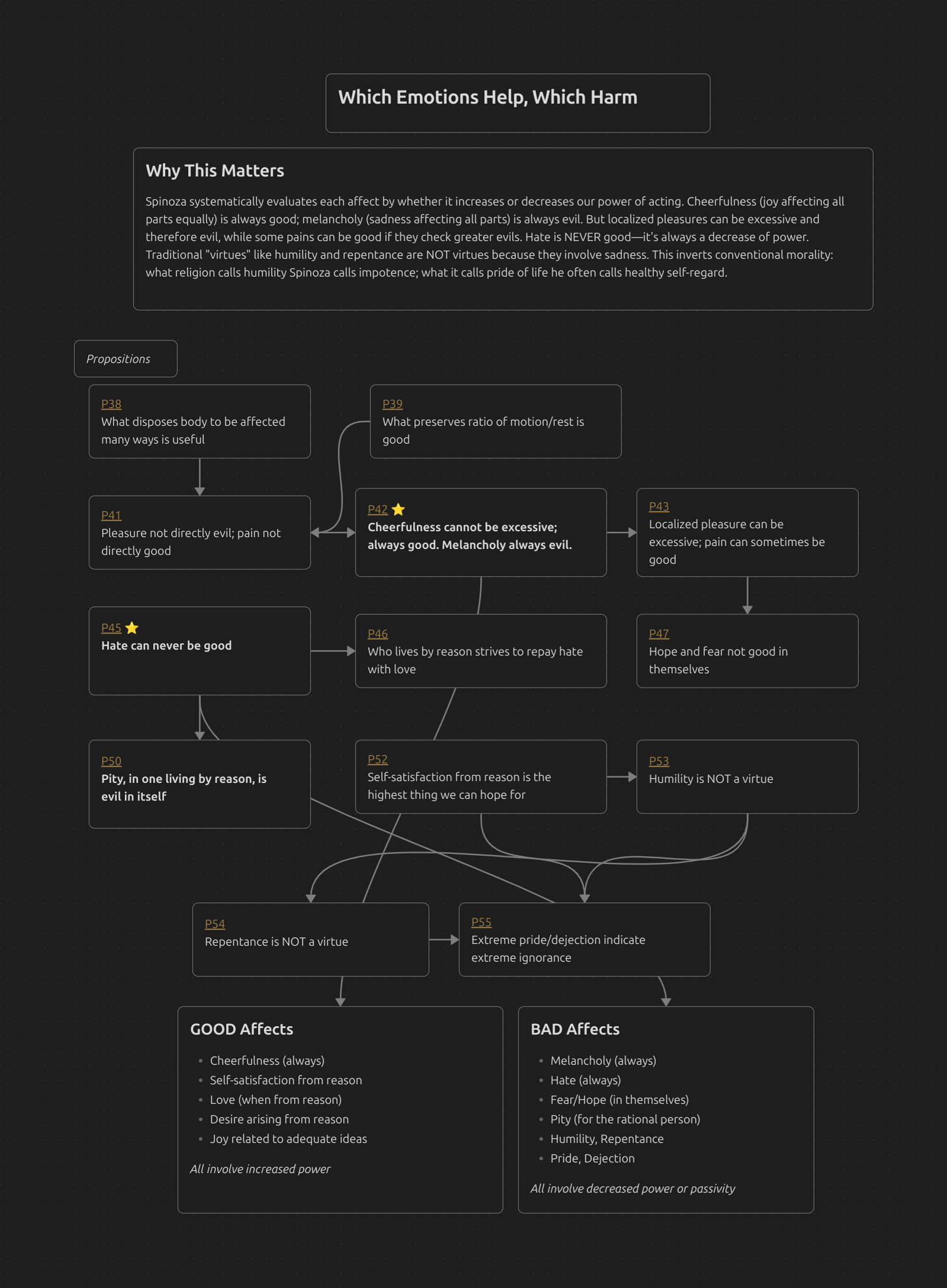
Spinoza systematically evaluates each affect by whether it increases or decreases our power of acting. Cheerfulness (joy affecting all parts equally) is always good; melancholy (sadness affecting all parts) is always evil. But localized pleasures can be excessive and therefore evil, while some pains can be good if they check greater evils. Hate is NEVER good—it’s always a decrease of power. Traditional “virtues” like humility and repentance are NOT virtues because they involve sadness. This inverts conventional morality: what religion calls humility Spinoza calls impotence; what it calls pride of life he often calls healthy self-regard.
Portrait of the Free Person
Why This Matters
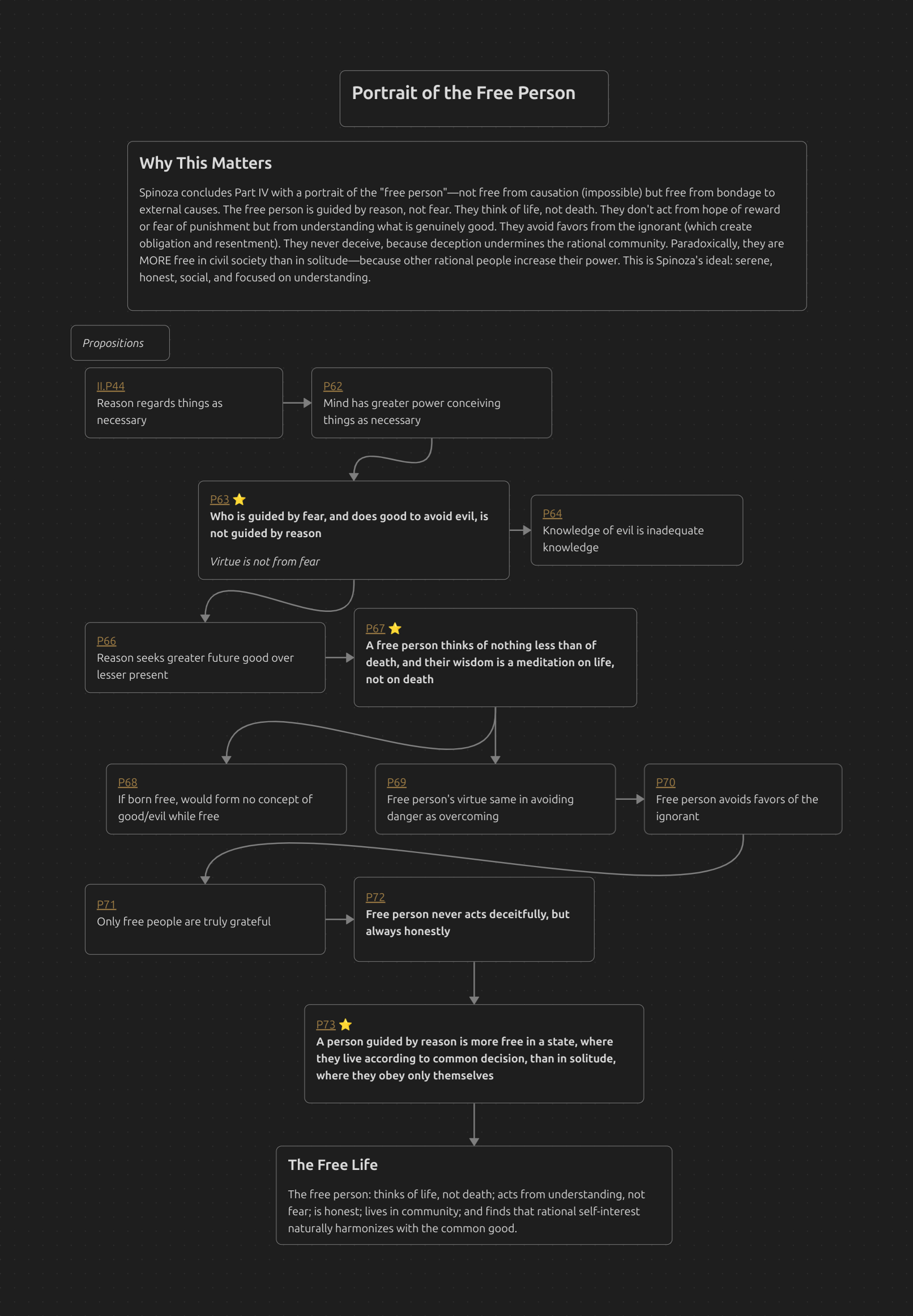
Spinoza concludes Part IV with a portrait of the “free person”—not free from causation (impossible) but free from bondage to external causes. The free person is guided by reason, not fear. They think of life, not death. They don’t act from hope of reward or fear of punishment but from understanding what is genuinely good. They avoid favors from the ignorant (which create obligation and resentment). They never deceive, because deception undermines the rational community. Paradoxically, they are MORE free in civil society than in solitude—because other rational people increase their power. This is Spinoza’s ideal: serene, honest, social, and focused on understanding.
Appendix: How to Live Well
Why This Matters
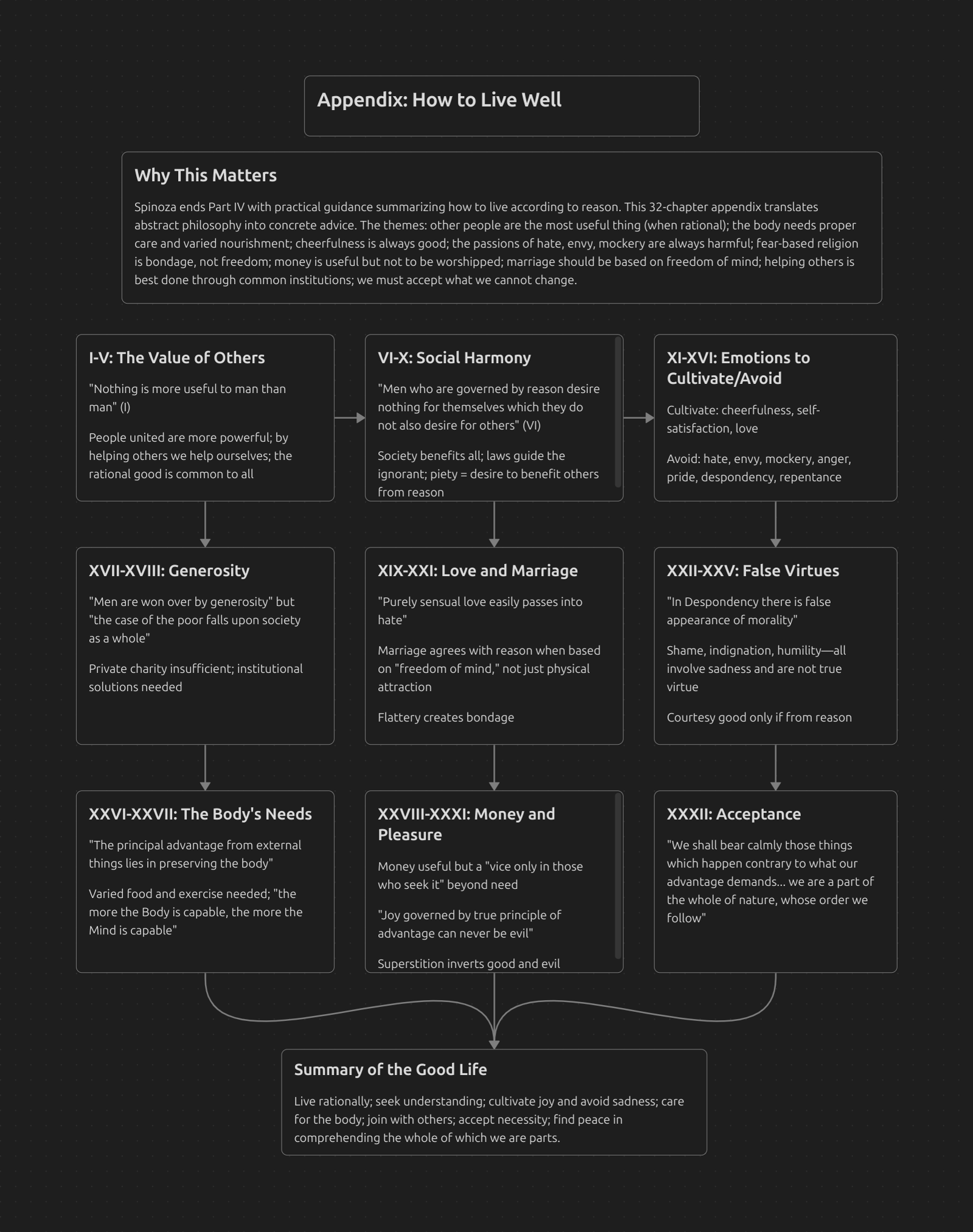
Spinoza ends Part IV with practical guidance summarizing how to live according to reason. This 32-chapter appendix translates abstract philosophy into concrete advice. The themes: other people are the most useful thing (when rational); the body needs proper care and varied nourishment; cheerfulness is always good; the passions of hate, envy, mockery are always harmful; fear-based religion is bondage, not mental freedom; money is useful but not to be worshipped; marriage should be based on mental freedom of mind; helping others is best done through common institutions; we must accept what we cannot change.