There Is Only One Substance (Nature)
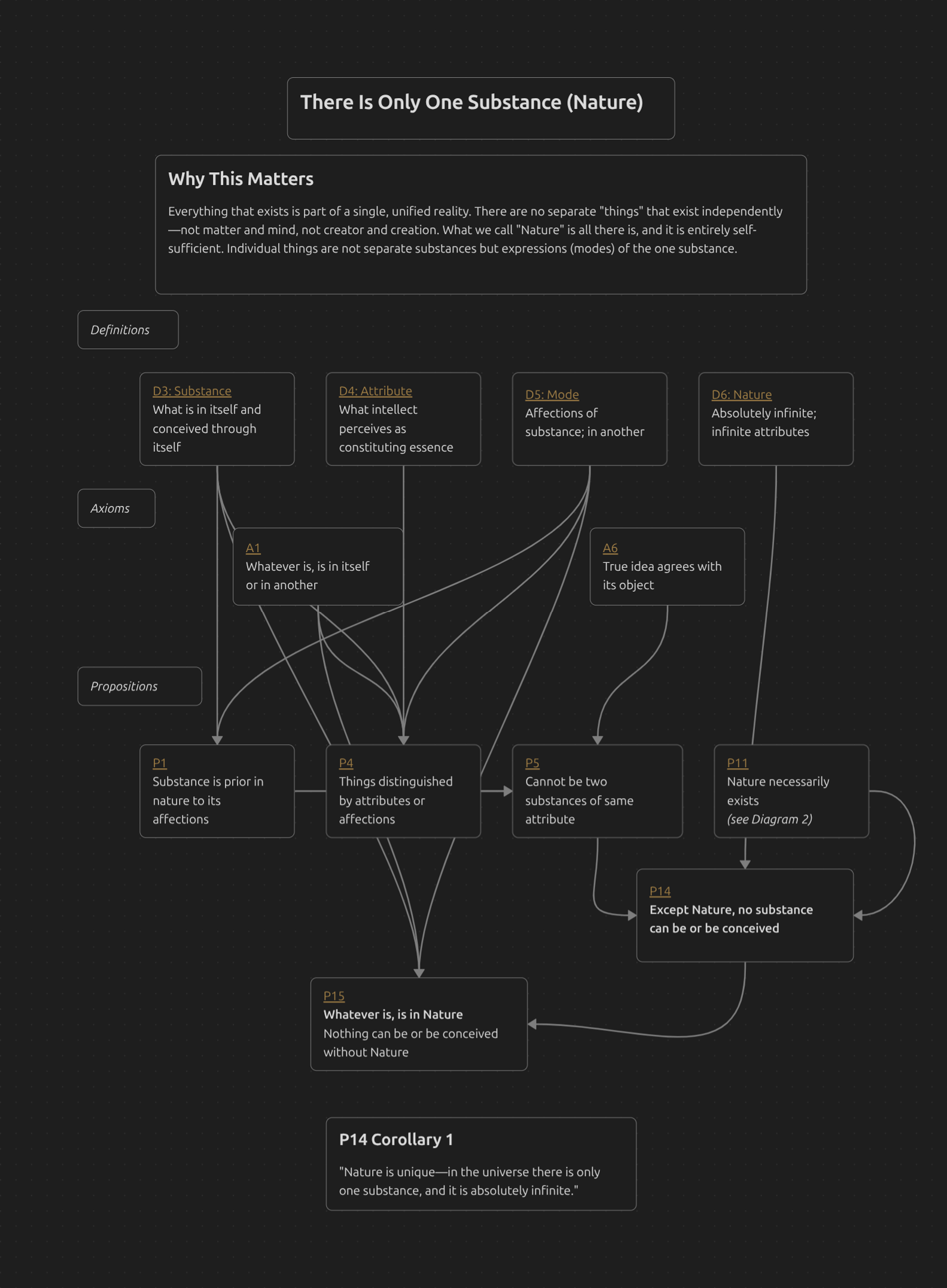
Why This Matters
Everything that exists is part of a single, unified reality. There are no separate “things” that exist independently—not matter and mind, not creator and creation. What we call “Nature” is all there is, and it is entirely self-sufficient. Individual things are not separate substances but expressions (modes) of the one substance.
Nature Is Self-Caused and Eternal
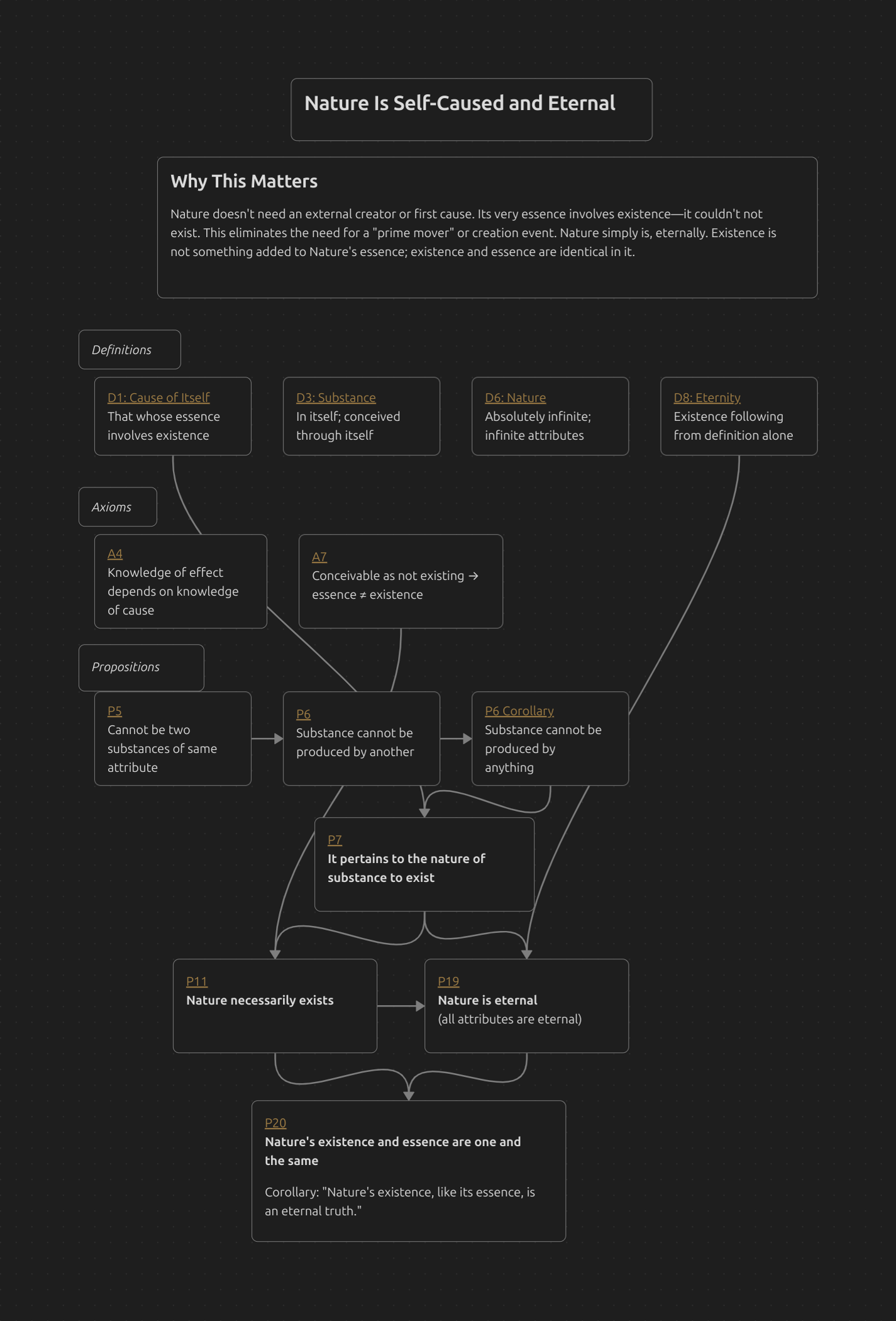
Why This Matters
Nature doesn’t need an external creator or first cause. Its very essence involves existence—it couldn’t not exist. This eliminates the need for a “prime mover” or creation event. Nature simply is, eternally. Existence is not something added to Nature’s essence; existence and essence are identical in it.
Everything Follows with Necessity
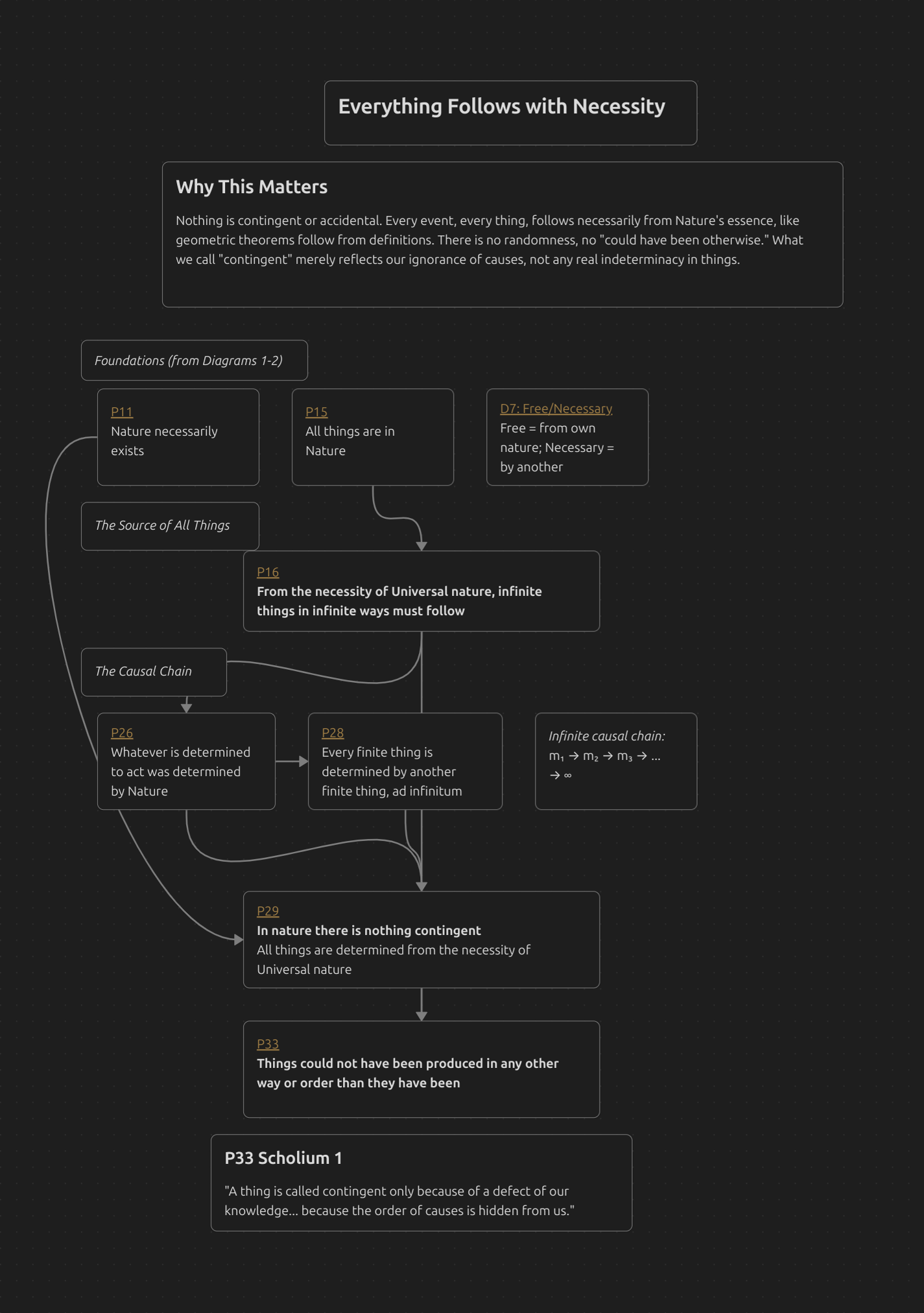
Why This Matters
Nothing is contingent or accidental. Every event, every thing, follows necessarily from Nature’s essence, like geometric theorems follow from definitions. There is no randomness, no “could have been otherwise.” What we call “contingent” merely reflects our ignorance of causes, not any real indeterminacy in things.
Nature Does Not Act for Purposes
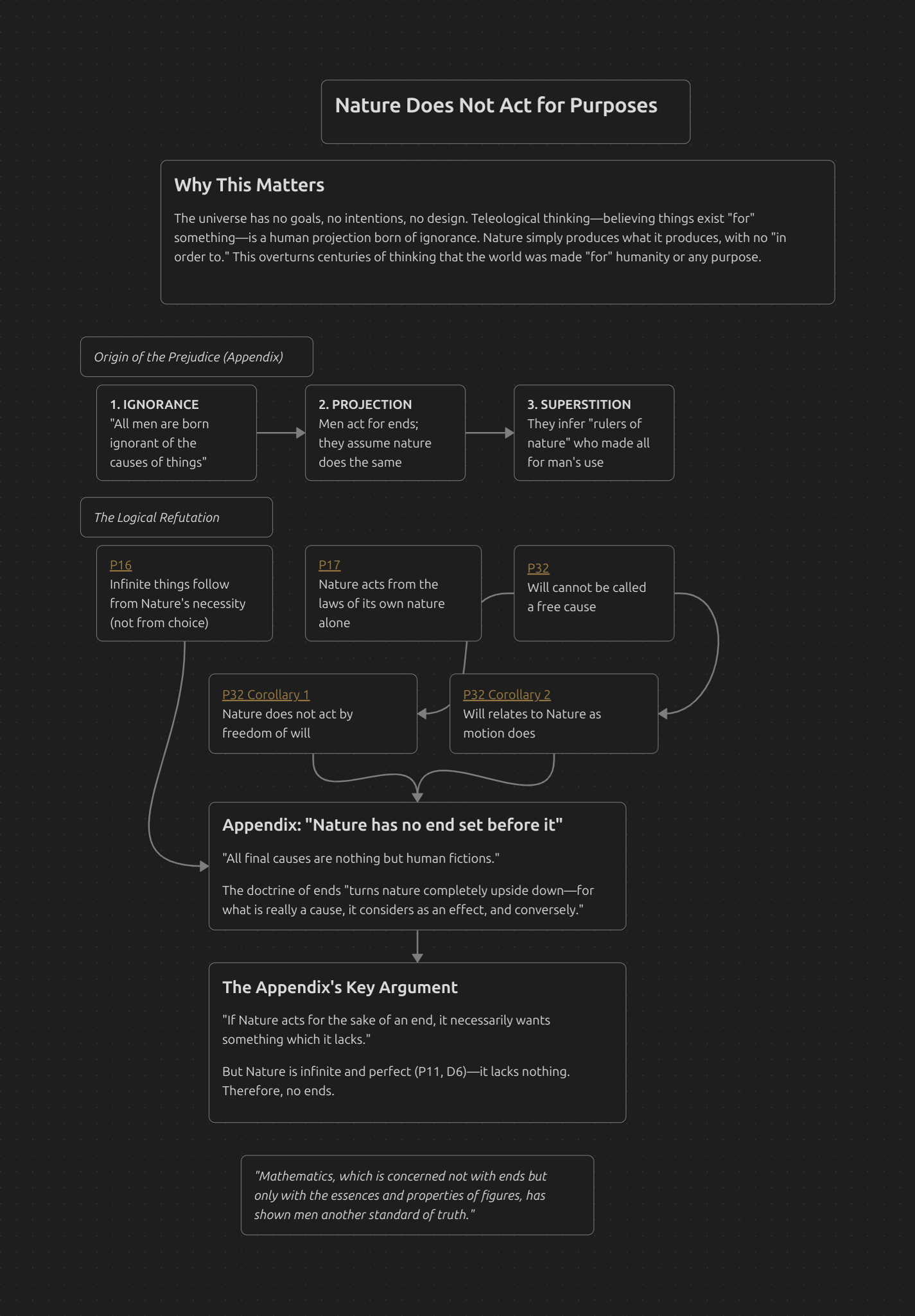
Why This Matters
The universe has no goals, no intentions, no design. Teleological thinking—believing things exist “for” something—is a human projection born of ignorance. Nature simply produces what it produces, with no “in order to.” This overturns centuries of thinking that the world was made “for” humanity or any purpose.
Mental freedom Is Acting from One’s Own Nature

Why This Matters
True mental freedom isn’t “free will”—choosing without cause. Mental freedom is acting from the necessity of your own nature, not being compelled by external forces. Nature alone is truly free, since it acts entirely from itself. Humans approach mental freedom through understanding necessity and acting from reason rather than compulsion.
Good, Evil, Order, and Beauty Are Human Constructs
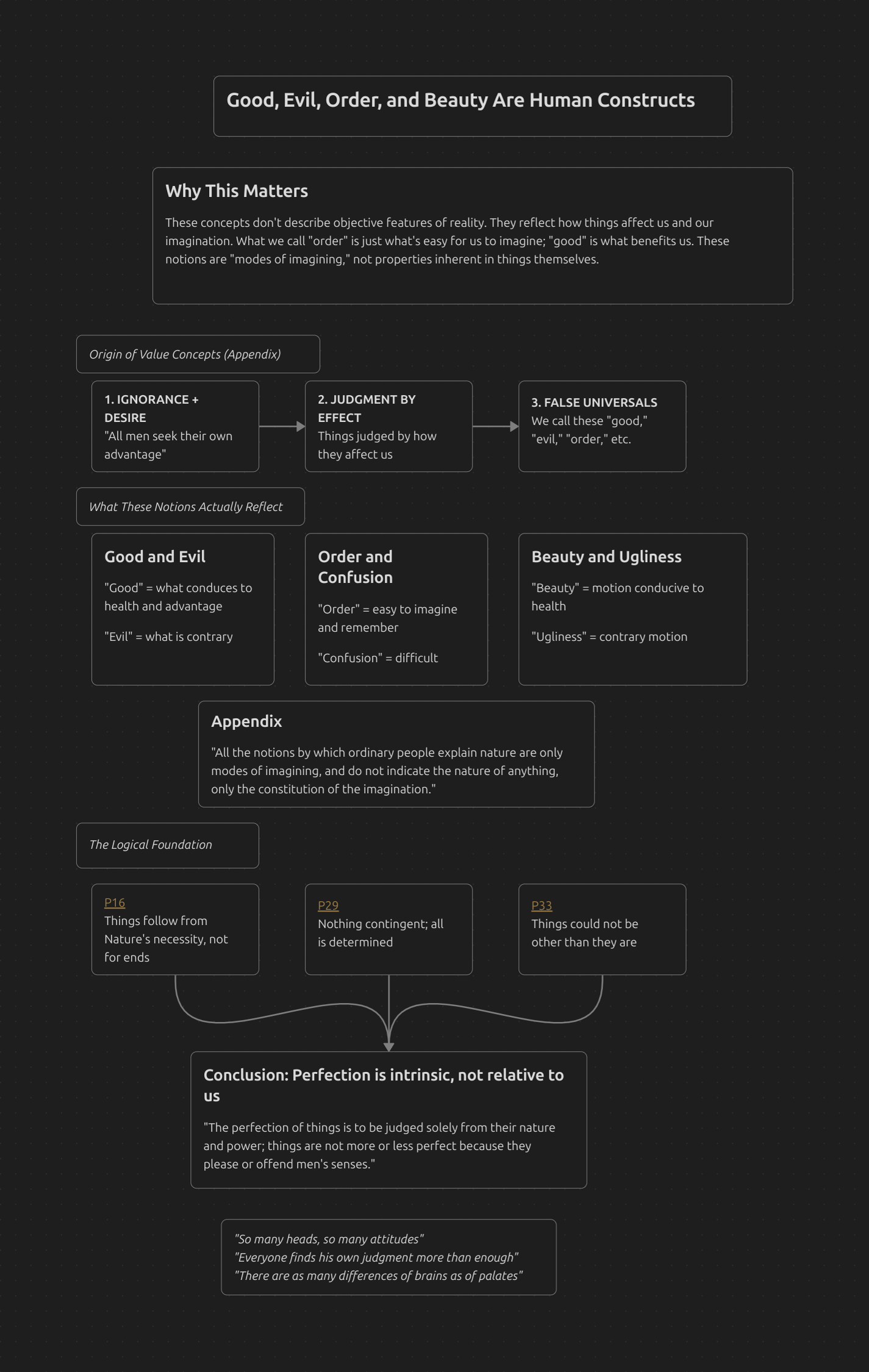
Why This Matters
These concepts don’t describe objective features of reality. They reflect how things affect us and our imagination. What we call “order” is just what’s easy for us to imagine; “good” is what benefits us. These notions are “modes of imagining,” not properties inherent in things themselves.